The Love Child of OpenClaw and Claude Cowork: The Rise of Proactive AI Agents

Most AI agents today are evolving along two distinct paths.
The first path is the always-on personal agent. This type of agent promises continuity: it knows the user over time, remains accessible across different channels, and can interact with tools, automations, and connected devices. Its focus is on being present and integrated into the user’s daily life and work, rather than merely functioning as a chat window. It serves as an agent layer that can seamlessly accompany users throughout their routines.
The second path is the work executor for delegated tasks. This agent optimizes structured completion: you provide it with a goal, and it plans, gathers context, utilizes files and applications, coordinates subtasks, produces outputs, and seeks approval when necessary. Its emphasis is on execution, transforming chaotic inputs into polished work and utilizing relevant context through integration with various systems of record.
OpenClaw represents the first path, while Claude Cowork aligns with the second. The next significant development will come from combining these two approaches.
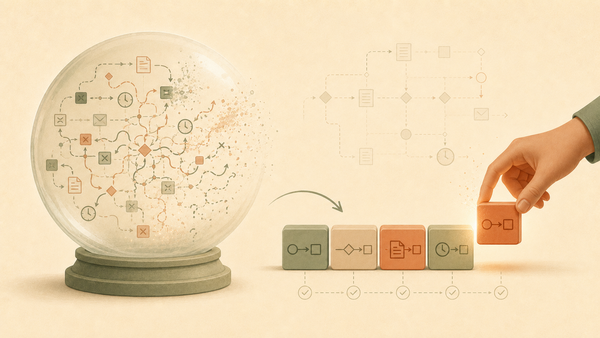
We are not discussing a simple chatbot, a copilot within a CRM, or a task automation tool. We envision a proactive agent that is continuously present, personally aware, and professionally competent. This agent would be capable of interpreting changing contexts and turning them into actionable tasks before the user even has to ask. Let’s explore how the combination of a System of Record and a System of Work or Execution, along with a System of Interpretation as a bridge, can lead us to this goal!
Systems of Record Are Not Systems of Work
Historically, enterprise software has primarily focused on systems of record. Customer Relationship Management (CRM) systems document customer information, Human Resources (HR) systems track employee data, Enterprise Resource Planning (ERP) systems record operational details, ticketing systems log issues, and document management systems help organize files. These systems are crucial because organizations need reliable information about their customers, agreements, changes made, approvals, and the timing of these actions.
However, a system of record does not dictate actions. A CRM can store meeting notes, a transcription system can record conversations, an inbox can hold email threads, and a spreadsheet can track changing numbers. While these records are necessary, they do not, on their own, clarify what is important, what has changed, what should happen next, or where human intervention is needed.
This is why many "copilot" functionalities may seem useful yet are inherently incomplete. They summarize records, answer questions about the information, help update it, and even trigger certain workflows upon request. Ultimately, they still rely on humans to interpret the information and decide on the next steps in the workflow.
Cowork Is A System Of Work or Execution
Claude Cowork-style agents distinguish themselves from traditional systems of record.
They are not designed to serve as a CRM, spreadsheet, file system, browser, document repository, or project management tool. Instead, they connect to these systems, retrieve relevant context, and execute work across them.
This distinction is important.
A system of record maintains a consistent, reliable truth. In contrast, a system of execution draws on multiple sources of truth, uses that information to complete tasks, and produces an output—whether a draft, report, presentation, memo, analysis, spreadsheet, plan, or update.
With this approach, the agent does not need to store every customer, file, deal, account, ticket, or document in its own database. It can access the systems that already contain those records, gather the necessary information, reason through it, and create the required work product.
Users no longer have to specify every manual step, such as:
- Open this file.
- Read these notes.
- Pull that number.
- Check that email.
- Draft this paragraph.
- Update that slide.
Instead, users can simply state an outcome:
- Prepare the report.
- Analyze the spreadsheet.
- Draft the response.
- Update the presentation.
- Turn this folder into a client-ready memo.
The agent is capable of planning, retrieving information, writing, editing, checking, and producing an artifact. This represents delegated work execution. The power of this system lies in its ability to work across various platforms without being confined to a single one. However, in most cases, the human user still initiates the work. The agent is powerful but reactive, responding to the user's needs.
This opens the door for proactive agents.
Why Copilots Inside Systems of Record Are Not Enough
Many existing enterprise software companies are responding to the current shift by adding a copilot layer on top of their systems of record.
For example:
- A CRM adds an AI assistant.
- A support tool includes summarization.
- A project management tool generates tasks.
- A document repository offers search and chat functionality.
This approach is understandable. These products have large user bases, established workflows, trained users, permissions, objects, fields, reports, and administrative models. They cannot simply overhaul the user experience and rebuild everything around agents.
As a result, they tend to overlay AI onto the existing product.
However, this creates a limitation. The AI remains restricted by the old interface. The product is still organized around records, fields, tables, pages, modules, and workflows that were designed before agents existed. The copilot may assist with navigation or summarization, but the core system remains the focal point.
In contrast, newer agent-native products do not carry this burden. They are not required to resemble the old systems they connect to. For instance, a work agent doesn’t need to look like a CRM just because it retrieves data from one. It does not need to mimic a spreadsheet solely because it analyzes spreadsheet data. Similarly, it isn't necessary for it to resemble a file browser just because it works across files.
This is why products like Claude feel fundamentally different. They are not attempting to recreate the user interfaces of every source system; instead, they are constructing a new execution space on top of them.
Claude Design doesn't look anything like Figma, Cloud code doesn't look anything like VS Code, and Claude Cowork doesn't look like any system of record!
The key lesson for new products is essential:
There is no need to create another system of record and sprinkle a copilot layer on top.
If you do not have the baggage of the past, you are free to start with the work itself:
- What outcome is the user trying to achieve?
- What records does the agent need to consult?
- What interpretation is required?
- What artifact or action should be produced?
- What can happen autonomously?
- Where does human approval become necessary?
This represents a fundamentally different design approach.
The old model is:
System of record first, AI assistant second.
The new model is:
Work and interpretation first, and records underneath.
This is why the next generation of products should not simply be labeled as CRM plus AI, or project management plus AI. Instead, they should be agent-native systems that connect to records, interpret context, and facilitate work through purpose-built interfaces.
Personal Agents Provide Continuity
OpenClaw-style agents operate from a fundamentally different premise. They are not merely workspaces for specific tasks; instead, they are persistent agents that remain accessible across various channels and over time. These agents can understand the user, respond through various interfaces, use tools, run automations, and operate autonomously in the background.
This continuity is crucial.
A personal agent must comprehend more than just files and applications; it needs to grasp the following aspects about the user:
- Preferences
- Habits
- Goals
- Communication style
- Relationships
- Routines
- Boundaries
- What should be escalated
- What should be ignored
Questions to consider include:
- What can be handled automatically?
- What should never occur without user approval?
This type of understanding is distinct from simply accessing enterprise data.
For example:
- A work executor can read a document, while a personal agent can determine whether this document is relevant to the user.
- A work executor can draft an email; however, a personal agent understands if the recipient requires a cautious tone, a brief response, or no reply at all.
- A work executor can manage a calendar, but a personal agent knows which meetings are routine, sensitive, political, or high-stakes.
The promise of a personal agent extends beyond merely performing tasks; it lies in executing them with memory, continuity, and a deep understanding of the user.
The Missing Layer: Interpretation
The next generation of agents requires a third layer between records and work: interpretation.
- A system of record captures what has happened.
- A system of work manages what needs to be done.
An interpretive system analyzes what the record means and determines whether work should be created.
This is the layer that most current products overlook. Without interpretation, an agent can retrieve information and execute tasks, but it cannot reliably decide what is important. Consequently, it either waits for instructions or offers irrelevant suggestions.
With effective interpretation, the agent can connect various signals, such as:
- a meeting transcript
- an email thread
- a deadline
- a document change
- a relationship history
- a user preference
- a business goal
From these signals, it can be inferred:
- Something has changed.
- This change is significant.
- Work should be created.
- This task can be handled automatically.
- This task requires human judgment.
This transformation marks the shift from viewing AI as just a tool to recognizing it as a true coworker.
The New Stack: Record, Interpretation, Work
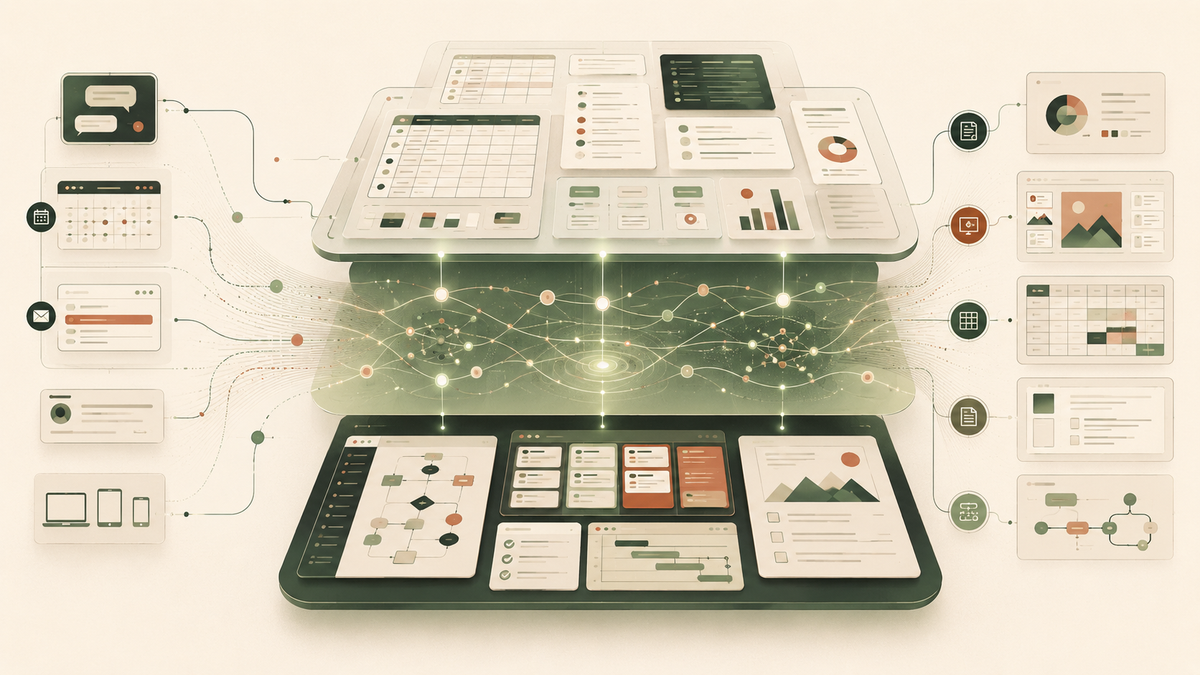
The emerging agent framework is organized into three primary components
System of Record
This component addresses the questions of what is true and where the information originated.
System of Interpretation
This layer answers questions about the meaning of the data, its relevance, and how it connects to the user’s goals, preferences, relationships, and obligations.
System of Work
This part determines which actions should be taken, which tasks the agent can perform, which artifacts must be produced, and which actions require approval.
This model integrates the strengths of two agent traditions. From OpenClaw-style personal agents, it incorporates:
- Continuity
- Multi-channel availability
- User memory
- Background observation
- Tool use
- Automation features
- Personal boundaries
From Claude Cowork-style work executors, it includes:
- Goal-driven execution
- Planning capabilities
- Artifact creation
- Task workspaces
- Rich integrations with various systems of record
The interpretation layer serves as a bridge between these two systems. It enables the agent to understand not only how to complete tasks but also the purpose behind those tasks.
Proactivity Comes From Personal Understanding
A proactive agent is not just one that runs in the background. Background execution without understanding becomes mere noise. True proactivity requires personal context. The agent must know enough about the user to determine whether a signal is significant.
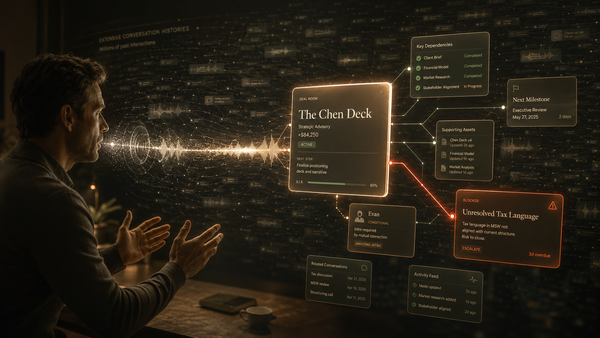
For instance, consider a user who receives a long email thread before a meeting. A generic agent can summarize it, and a task assistant can draft a reply if requested. However, a proactive personal work agent can recognize that the email changes the meeting agenda. It understands that the user typically wants a brief prep note before high-stakes conversations. Therefore, it would prepare that note and present it before the meeting.
This ability to respond appropriately comes from interpretation. This is why deep personal understanding is crucial. Preferences, relationships, goals, and boundaries are not just decorative memories; they are what make proactivity valuable rather than intrusive.
The same principle applies in professional settings. The agent needs to grasp the user’s role, responsibilities, working style, and decision-making authority. It must understand what the user is accountable for. This is where personal and organizational contexts intersect.
Beyond Routine Tasks
The first wave of enterprise AI often focuses on routine tasks such as summarizing, drafting, classifying, extracting, routing, and updating. While these tasks are useful, the more intriguing future lies in agents that manage the connective aspects of work.
These agents will notice when something changes, understand why it matters, and relate it to goals and obligations. They will create workstreams, gather sources, draft documents, track blockers, and only consult humans when judgment is required.
This evolution makes the technology feel less like software and more like a coworker, not because the agent replaces the human, but because it no longer needs to be reminded of every obvious next step.
A good coworker does not wait for prompts like: "Please notice the deadline, connect it to the email, draft the follow-up, attach the source, and remind me to approve it."
Instead, a good coworker will say, "I saw the email. It affects the plan we discussed. I have drafted the follow-up, attached the relevant source, and need your approval before sending."
That is the fundamental difference.
The Changing User Experience
An effective agent cannot be confined to just a chat box or a static record page. The interface must present four key elements:
- What the agent observed
- What the agent interprets this information to mean
- What tasks has the agent initiated
- Where human intervention is required
This necessitates a new product design that includes:
- Record panels for essential information
- Interpretation panels for insights and confidence levels
- Work canvases for task execution
- Source markers for tracking origins
- Approval gates for human decision-making
- Activity logs for transparency and auditing
- Attention surfaces to highlight immediate user needs
Sometimes the appropriate interface element may be a simple nudge; other times it could be a draft, a review queue, or a comprehensive canvas that includes sources, phases, artifacts, and approvals.
The user interface becomes adaptive because the agent is not just answering questions; it is actively managing work within an evolving context.
Conclusion
The next generation of effective AI agents will not be defined merely by their ability to chat, use tools, or possess memory—these features will soon become standard requirements. The critical question will be:
Can the agent understand when and what work needs to be done?
This requires integrating two key components.
- The always-on personal agent: Contributes continuity, user understanding, communication channels, memory, tools, and an ongoing presence.
- The delegated work executor: Provides structured planning, execution, artifact creation, workspace modes, and professional-grade completion.
- An interpretation layer: Connects both and enables proactivity.
Together, these components create agents that are:
- Grounded in systems of record
- Aware of the user
- Capable of professional execution
- Able to interpret changing contexts
- Proactive enough to initiate work
- Governed sufficiently to recognize when to stop
The future isn't just about agents that answer questions or simply execute tasks. It's about agents that understand what matters, know when to initiate work, and manage it until human judgment is required.