From Task Machine to Decision Partner: Building AI Agents Around Human Judgment
From Task Machine to Decision Partner: Building AI Agents Around Human Judgment


X: https://x.com/hackintoshrao/status/2059504082377920729
Linkedin: https://www.linkedin.com/posts/hackintoshrao_from-task-machine-to-decision-partner-building-share-7465063731031375874-KZ-w/
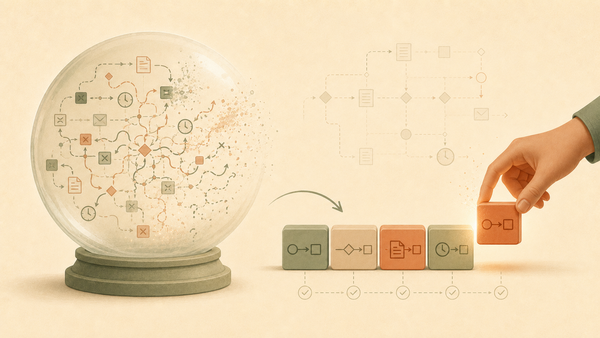
The first generation of AI agents was designed like task machines. You could provide them with context, connect them to various tools, and they would execute tasks efficiently. They could summarize meetings, draft emails, update records, schedule follow-ups, create reminders, search for documents, and move work forward faster than a human assistant ever could.
This functionality was useful, but as these agents became more advanced, a deeper issue became apparent. Many tasks are not just simple; they often involve decisions that resemble them.
For example, the instruction “Send the client a follow-up” seems straightforward, but it prompts several questions: Should this message be sent at all, or should it only be drafted? Is the tone appropriate? Does the message convey advice? Is any crucial evidence missing? Could this action pose risks related to compliance, finances, relationships, or operations?
Similarly, the task “Update the customer record” appears simple until you consider: Is this information confirmed, inferred, or merely suggested? Should the AI add a note, update the primary source of truth, or consult a human before proceeding?
Your AI agent does not care in the human sense. It's not concerned, doesn't fully understand the consequences, has anxiety or loyalty issues, and doesn't fully model professional responsibility!
The real challenge in developing effective agents is not just providing them with more tools. It lies in teaching them where task execution ends, and decision-making begins. Thus, bridging the gap between how Humans and LLMs think!
The Failure Was Not Just Bad Outputs
When AI agents fail in real workflows, the issue is often framed as a matter of accuracy. The model may have misunderstood something, hallucinated, or made the wrong decision.
However, many failures are more specific than this; They are boundary failures!
For example, the agent might draft something it should have merely suggested, or it might update something it should have only proposed. It could act when it should have asked for clarification, or it might remain silent when it should have escalated an issue. It could also treat a weak signal as confirmed truth or confuse a high-stakes decision with a low-stakes task.
This is why simply saying "make the model smarter" isn't a complete solution. A more sophisticated task machine is still just a task machine! While it may perform tasks more fluently, it can still overlook the most crucial question:
Is this something the AI should handle, or is it a decision that requires human judgment?
This question fundamentally changes the design challenge.
Understanding Human Judgment
Human judgment goes beyond simply clicking an approve button. It involves interpreting consequences, accepting responsibility, and making decisions in uncertain situations.
In professional contexts, this may prompt questions such as:
- Is this appropriate for this client?
- Is this the right tone?
- Is this the right time?
- Could this pose a compliance risk?
- What happens if we're wrong?
- What happens if we do nothing?
- Should this be included in the system of record?
AI can assist in answering these questions by gathering context, summarizing evidence, comparing options, drafting language, and identifying risks. However, the ultimate responsibility rests with the human.
This distinction is important. While an AI can simulate potential outcomes and enhance decision-making, it cannot be held accountable in the same way a person can.
This marks the shift from being merely task-oriented to becoming a decision-making partner:
The AI is not meant to replace human judgment; it is designed to support and enhance it.
AI Action vs. Human Judgment
It's essential to distinguish between two often intertwined aspects: AI action and human judgment.
AI action refers to the tasks a system can carry out using tools and data. These actions may include:
- Reading a transcript
- Summarizing a document
- Extracting action items
- Drafting an email
- Suggesting a next step
- Creating an internal reminder
- Preparing a brief
- Appending a note
Human judgment, on the other hand, is the stage where the work has significant consequences. This includes:
- Sending the email
- Confirming the interpretation
- Committing to a record update
- Approving sensitive language in advice
- Deciding whether to raise an issue now or later
- Accepting responsibility for a decision
A single workflow may involve both types of actions. For example:
AI Action: Draft a client follow-up.
Human Judgment: Determine if the message should be sent, softened, delayed, escalated, or rejected.
Or consider this example:
AI Action: Infer that a customer may care about a specific issue.
Human Judgment: Decide whether that inference is strong enough to be recorded as a confirmed fact.
This distinction is where delegation becomes a central aspect of the process.
Trust Is Too Vague; Delegation Is Designable.
Many AI products discuss trust as if it were just a feeling to be maximized. However, the question “Do you trust the AI?” is too broad.
Better questions to consider are:
- What is the AI allowed to do?
- For which task?
- For which user?
- Based on what evidence?
- At what level of risk?
- With what approval requirements?
You might trust an AI agent to summarize a meeting or draft an email, but you may not trust it to send that email. You could allow it to add a suggested fact but not to overwrite a confirmed record. You may permit it to schedule an internal meeting, but not to cancel a client meeting.
These distinctions are not inconsistent; they represent calibrated delegation. Delegation defines the boundary between AI actions and human judgment.
A well-designed agent interface should make this boundary clear:
Allowed:
- Summarize evidence
- Draft internal notes
- Prepare follow-ups
Needs Approval:
- Send client-facing messages
- Update confirmed records
- Use advice-sensitive language
Blocked:
- Delete source records
- Make external commitments
- Execute irreversible changes
Amanda Kavner, PhD, provides insightful perspectives on this issue. In her post, "Why Trusting AI Requires More Than Just Good Algorithms," she argues,
Effective human-AI collaboration depends on more than just raw AI capability. People need to understand when to rely on the AI, when to override it, and how its behavior varies across different situations.
She views this concept as “Hybrid Cognitive Alignment”, the ongoing calibration of trust as humans learn how AI behaves. Her practical advice to AI developers was straightforward:
Communicate limitations, not just performance.
This shift is exactly what agents need. The goal should not be to achieve maximum trust; rather, the aim is calibrated delegation.
Consequence Modeling: The Missing Layer
Before an agent takes action, it should consider the following questions:
- Can I do this?
- What could happen if I do this?
- What could happen if I do nothing?
- What could happen if I express this poorly?
- What could happen if I write this into the database?
This process is known as Consequence modeling. A consequence refers to the downstream effect of an action, inaction, statement, or decision.
Consequences can fall into several categories:
- Financial
- Compliance
- Client relationship
- Operational
- Timing-related
- Reputational
- Data integrity
For example, sending a message may have consequences for client relationships. Updating a confirmed record may affect data integrity. Choosing to do nothing might lead to timing consequences. Deleting or overwriting data can result in operational and audit-related consequences.
Understanding these consequences matters because not all actions taken by an AI have the same impact on the world. For instance:
- A summary generally has low consequences.
- A draft is usually reversible.
- An append-only note is safer than overwriting existing data.
- A database update carries greater significance.
- Deletion is highly consequential.
- A client-facing recommendation may be practically irreversible, even if it can technically be edited later.
The agent should grasp this difference.
A consequence assessment might look something like this:
json
{
"proposed_action": "update_customer_record",
"mutation_type": "update",
"possible_consequence": "Future workflows may rely on an assumed preference treated as confirmed truth.",
"severity": "high",
"likelihood": "medium",
"reversibility": "medium",
"evidence_strength": "low",
"recommended_boundary": "human_confirmation_required"
}
The aim is not to scare the user with warnings but to illustrate the importance of judgment. This is also where the concept of trust calibration becomes practical. The interface should not merely state:
Confidence: 87%
Instead, it should communicate:
- Here is what I observed.
- Here is what I inferred.
- Here is the potential outcome.
- Here is what I am permitted to do.
- Here is where your decision is needed.
Confidence serves as a model signal, while consequence acts as a judgment signal. Agents require both to operate effectively.
Permission Boundaries Should Be Dynamic
Permission boundaries should not be one-size-fits-all; they should vary based on several factors, such as:
- Task type
- Client or customer
- Evidence strength
- Risk level
- Action reversibility
- Historical corrections
- Firm or team policy
For example, in one workflow, an agent may be allowed to automatically create internal meeting preparation materials. In another workflow, the agent may only be permitted to draft content. When working with a sensitive customer, the agent might require approval for tone. In a regulated workflow, the agent may need to pause before any external communication.
The product should support various modes, including:
- Observe
- Suggest
- Draft
- Prepare
- Append
- Update with approval
- Send with approval
- Escalate
- Stop
This approach allows agents to gradually earn greater task delegation over time. They do not gain trust magically; instead, they build a record of reliability, indicating where they can act independently, where they need review, and where they should never act alone.
It's important to make a distinct note here:
Although agents can earn more delegation, they do not earn responsibility. Responsibility remains with the human and the organization. The role of the agent is to facilitate the application of that responsibility.
The Alignment Ledger
As delegation evolves, the system needs to maintain a specific type of memory. This memory should encompass not only factual information but also alignment.
An Alignment Ledger tracks the collaborative process between humans and AI agents, documenting the following:
- What proposals did the AI make?
- What evidence did the AI provide?
- What consequences did the AI identify?
- What boundaries did the AI recommend?
- What actions did the human take (approve, edit, reject, or defer)?
- What lessons should the agent learn from those corrections?
Over time, this detailed tracking becomes more valuable than a simple confidence score. It allows the system to learn specific preferences and behaviors, such as:
- This user always reviews client-facing messages.
- This client prefers softer language.
- This category of tasks is safe to automate.
- This type of inference often requires correction.
- This database field should never be changed without approval.
This is the essence of Hybrid Cognitive Alignment, integrated into product architecture. The human learns the agent's behavior, while the agent adapts to the human's boundaries. The product makes this calibration visible, adjustable, and auditable.
This approach creates a much stronger foundation than simply asking users to "Trust the AI."
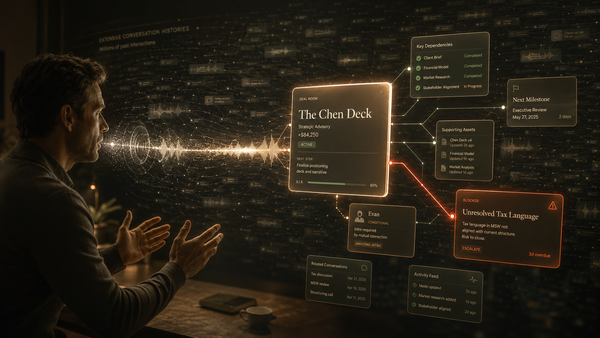
The Decision Partner Architecture
A decision partner requires more than just memory and tools; it needs a robust framework:
- Memory informs the agent about past events.
- Contracts outline what the agent should monitor.
- Temporal interpretation indicates when responses are due.
- Consequence modeling assesses what is at stake.
- Permission boundaries define what actions the agent is allowed to take.
- Human judgment determines what becomes a reality.
This model differs from the traditional task machine. While a task machine seeks to minimize friction everywhere, a decision partner strategically introduces friction where necessary. It moves quickly in low-risk situations and slows down when the stakes are high. It prepares work before requesting approval, clarifies why consent is needed, and halts when accountability is involved.
This selective friction is not a flaw; rather, it is a key feature that enhances the safety of delegation. Kavner’s article supports this notion, emphasizing that
Better algorithms don't automatically lead to more effective human-AI collaboration. It's essential that the interface helps people understand the system’s limitations and builds their trust over time.
The core function of the decision partner is not just to generate outputs; it also assists humans in deciding when those outputs should prompt action and what the associated consequences are.
The Future Is Not Full Autonomy
The next generation of agents will not be defined solely by their ability to operate without human intervention. Instead, they will be characterized by their understanding of the boundary between action and judgment.
An effective agent should be bold when executing low-risk tasks, but cautious in situations filled with uncertainty. It should highlight the potential consequences before any significant decisions are made. Additionally, it must differentiate between drafts and commitments, suggestions and confirmed facts, and distinguish between append-only records and destructive changes.
Most importantly, the agent should ensure that humans are engaged in the right ways. This means not requiring approval for every minor step and not blindly trusting the machine. Instead, humans should apply their judgment precisely where it is needed most.
The future of agents lies not in full autonomy, but in calibrated delegation. The best agents will not absolve humans of responsibility; rather, they will enhance human judgment, making it faster, clearer, better supported, and easier to apply at critical moments.